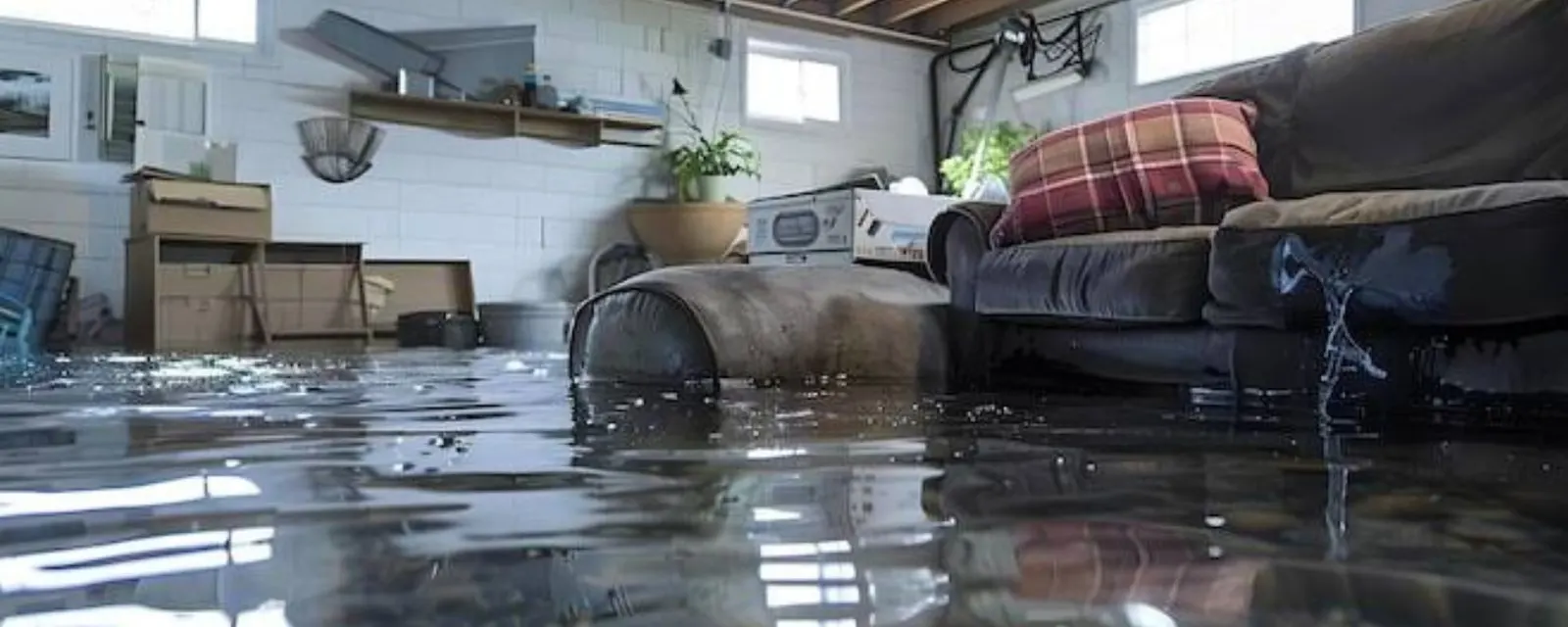
Step One Is Safety
Before anyone starts, the basement has to be safe. Standing water near outlets, a furnace or a panel is an electrical risk, and sewage is a health risk. Stay out and call. A crew cuts power to wet circuits at the panel only if it is safe, and brings protective equipment.
If water came from a sewer or from outdoors, treat it as contaminated, because it is Category 3.
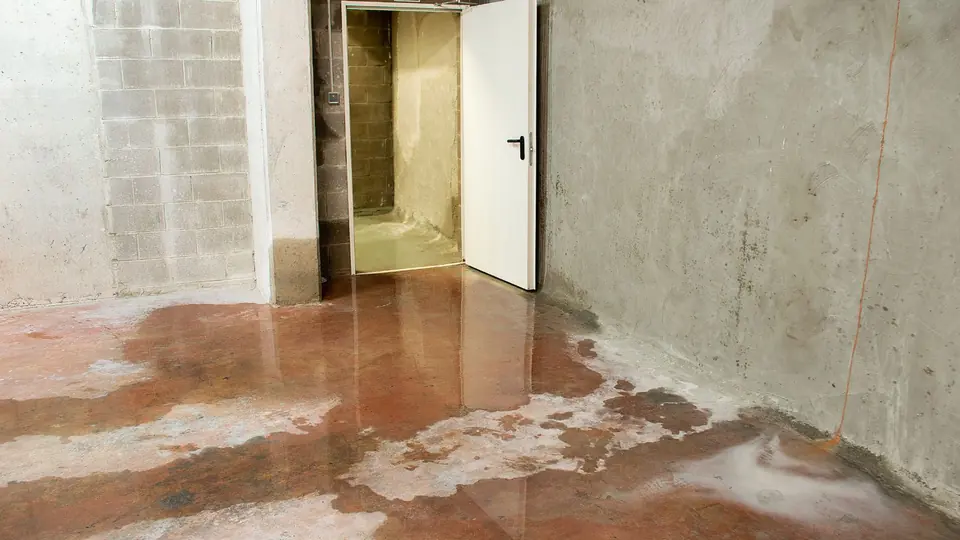
What the Crew Does
Extract
Pumps and extraction units remove standing water and pull water from carpet.
Remove
Carpet, pad, wet drywall and insulation that cannot be saved are cut out and bagged.
Disinfect
Cleaners and disinfectants are applied to surfaces that stay.
Dry
Air movers and dehumidifiers run until moisture readings match dry standards.
Daily readings guide the work, and the crew leaves when the numbers say so, not at the end of a fixed number of days.
What a Flood Does to a Finished Basement
| Material | Usual outcome |
|---|---|
| Carpet and pad | Replaced after outside or sewage water |
| Drywall | Cut a few inches above the water line, often higher |
| Insulation | Replaced if wet |
| Concrete slab | Cleaned and dried |
| Solid wood framing | Cleaned and dried |
| Cabinets | Solid wood dried, particle board often replaced |
Wicking carries moisture above the visible line, so crews cut higher.
Cleanup Is Not Waterproofing
Restoration repairs what the water damaged. It does not stop water from entering next time. If the same basement takes water every spring, call a drainage or waterproofing contractor as well.
We say so plainly. A dry basement with the cause unfixed is a temporary result.
How Long and How Much
Cleanup and drying usually take several days, and the rebuild adds more. The price depends on the water category, the square footage, the materials, the days of drying and the rebuild scope. We explain scope and price before work starts.
Lehi Flood Rules and Utah Flood Insurance
Chapter 12-D of Lehi's development code applies to FEMA special flood hazard areas inside the city. It requires a floodplain development permit for work there, and in A and AE zones it requires the lowest floor of a home, including a basement, to sit at least one foot above the base flood elevation.
The Utah Insurance Department states that a standard homeowners policy does not cover flood, and that flood policies usually have a 30-day waiting period. The FEMA Flood Map Service Center shows whether your address is in a mapped zone.
Source types: Lehi City development code Chapter 12-D, Utah Insurance Department flood FAQ.
Choosing a Basement Cleanup Company
The right company explains what it will do before it starts. Ask for a written scope that lists extraction, drying equipment, removal of damaged materials and a plan for readings. Ask what the price covers and what could change it.
A company that cannot explain its process or pushes you to sign immediately deserves another call to a second option.
Questions Worth Asking
- Will you give me a written scope before work starts?
- How will moisture be measured, and will I see the readings?
- Who removes the damaged materials, and who disposes of them?
- How are contents handled, and what do I need to move myself?
- What happens if the readings do not reach dry on schedule?
Sump Pumps, Window Wells and Grading
A basement flood often traces back to a short list of causes. A sump pump that failed or lost power, a window well that filled with rain, a downspout that dumps water near the foundation, or soil that slopes toward the house are all common.
Cleanup removes the water that got in. Fixing the cause is a separate job for a plumber, landscaper or foundation contractor, and it is worth doing before the next storm.
Testing the Sump Pump Before It Rains
Pour a bucket of water into the pit and watch the pump start and empty it. Check that the discharge line runs well away from the house. A battery backup helps if power fails during a storm.
Test it a few times each year and after any heavy storm. A pump that sat unused for months can stick.
For the next step after the water is out, see flood damage restoration and water damage cleanup. Basement calls come from Eagle Mountain and Draper as often as from Lehi.
What Gets Removed From a Flooded Basement First
Wet carpet and pad are usually first, followed by the bottom section of drywall and insulation if the water stood against the wall. Baseboards and trim come off so the cavity can breathe. Anything that holds water and cannot dry quickly is a candidate for removal.
Removal can feel drastic, but it is faster and cheaper than letting wet materials sit and cause a second round of damage.
A Note on Stored Items
Cardboard boxes soak up water and fall apart. Move what you can to a dry place and photograph what you cannot save. Papers and photographs can sometimes be frozen to stop damage until you can deal with them.
Keep an inventory with a short description and rough value for each item.
Utilities in the Basement
Furnaces, water heaters and panels often live in a basement. If water reached any of them, leave the power off and call a licensed professional before restarting. Gas appliances need the same care.
A restoration crew can work around these units, but only a qualified trade can confirm they are safe to run.
What To Document
For your insurer
- Photos of the water line and the damage before cleanup
- The time you found the water and the cause, if known
- A list of damaged belongings with age and value
- The written scope and moisture readings from the crew
Basement under water?
Call and describe the water and the rooms. We explain what to shut off and how scope is set.
Call (385) 988-9410For standing water right now, see emergency water removal. We also serve American Fork and Saratoga Springs.
Common Questions
As soon as the source is stopped. Wet drywall and carpet start to fail within a day or two.
Check the FEMA Flood Map Service Center for your address, and ask the city about floodplain rules.
Burst pipes are often covered, and flood from outside water is usually excluded. Ask your insurer.
No. We dry and restore, and we tell you when you need a drainage contractor too.