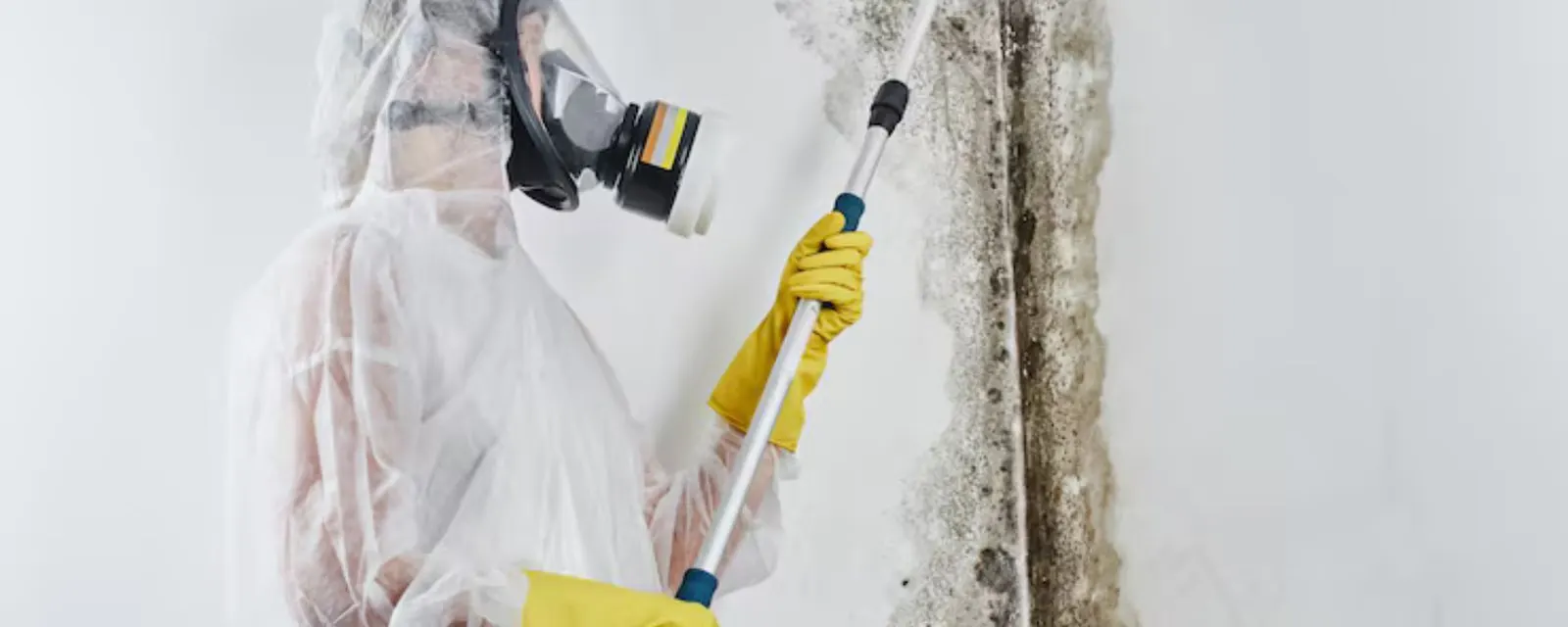
A Musty Smell, a Dark Spot, or a Wall That Never Quite Dries
Most people do not search for mold remediation. They notice a dark spot in the corner of a shower ceiling, a smell in a closet, or a stain that returns after painting. They are describing the same problem. Moisture stayed in a building material long enough for mold to start.
The first question is where the water came from. A toilet supply line, a leaking sink, an air conditioner condensate line, a roof or siding leak and a basement window well are the usual sources. Until the source is fixed, no cleaning lasts.
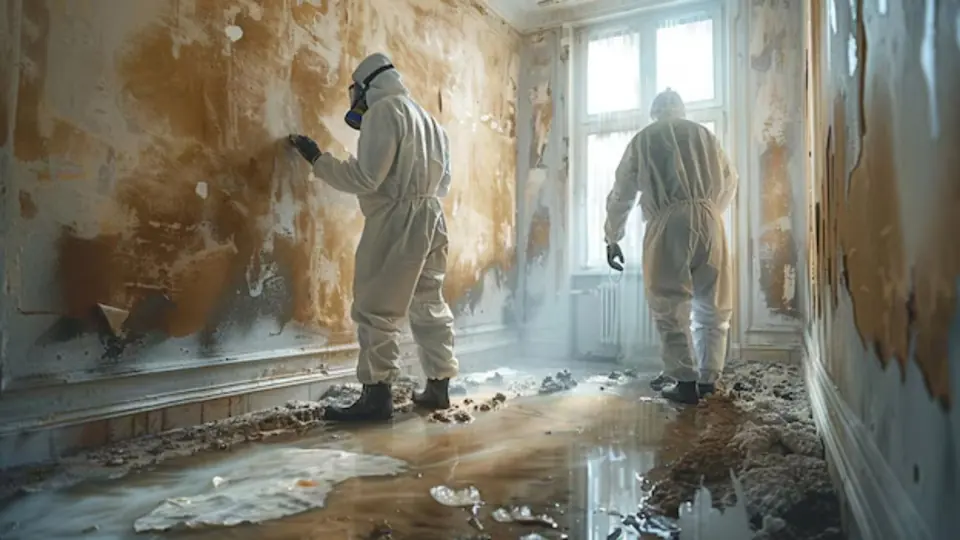
How Remediation Works
Find and fix the source
A plumber, roofer or HVAC technician repairs the leak first.
Contain
Plastic barriers and negative air keep spores from moving to clean rooms.
Remove and clean
Affected porous materials come out, and surfaces are cleaned with HEPA vacuums and damp wipes.
Dry and verify
The area is dried and checked, and clearance testing can confirm the result.
The published industry standard for mold remediation is ANSI/IICRC S520. Ask any company whether its crews work to it, and ask what happens if testing finds the area is not clear.
Mold Removal and Black Mold Cleanup
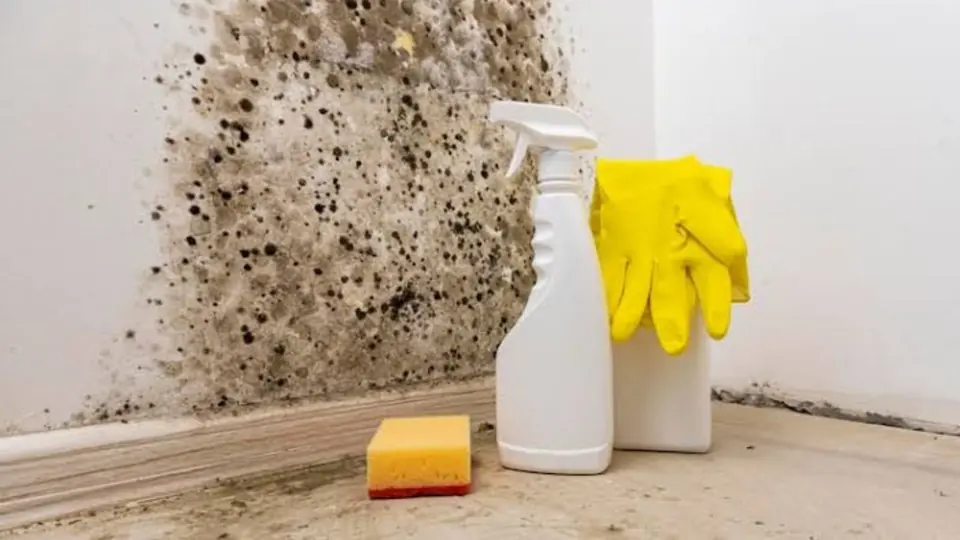
Color does not tell you what a mold is, and it does not tell you how serious it is. Black mold, green mold and white growth all call for the same response: find the moisture, contain, remove, dry. A person with health concerns should talk to a physician.
Small surface growth on a hard, non-porous surface can often be cleaned. Growth on drywall, insulation or carpet usually means removal, because mold roots into porous materials.
Mold After Water Damage
Mold can begin within a day or two of a wet event, and it is more likely when wet materials stay wet. That is why fast drying matters. If a leak was found late, a wall may already have growth behind it.
Start with water mitigation if the structure is still wet. After removal, water damage repair rebuilds.
| Step | What it answers |
|---|---|
| Visual inspection | Where moisture and growth are, and how far they extend |
| Testing | What is present in air or on surfaces, if you want data |
| Post-remediation verification | Whether the area is clear after cleanup |
| Independent clearance | A third party confirms the result, which some lenders ask for |
We describe what each step does and do not promise lender acceptance.
Mold Clearance for a Home Sale
Some buyers' lenders ask for mold to be addressed before a loan closes. Clearance testing by an independent party can document that an area is clear. Ask your agent and lender what they will accept.
We do not promise that a lender or buyer will accept a result.
Describe what you see
Call and tell us where the growth is, where the leak was and how long it has been there.
Call (385) 988-9410What the Price Depends On
- How much material is affected and where
- Whether containment and negative air are needed
- Materials involved, such as drywall, wood or carpet
- Drying days after removal
- Rebuild scope
We explain scope and price before work starts. Insurance may respond to mold that results from a covered, sudden water loss and often does not respond to mold from a long-term leak or neglect. Ask your insurer.
Mold Rules in Utah
Ask whether your state licenses mold work before you hire. The Utah Division of Professional Licensing pages we reviewed do not state a mold remediation license either way, so we make no claim.
Ask any company about its process, its containment steps and whether it follows ANSI/IICRC S520.
Source type: Utah Division of Professional Licensing site review.
Common Questions
No. Mold returns to a wet surface. Fix the source and dry the area first.
Color alone does not tell you. Health questions belong to your physician.
Not always. Testing can document conditions, and clearance testing can confirm results afterward.
We do not promise it will not. If the moisture source is fixed and the area stays dry, the conditions that feed mold are removed.
Yes. See Pleasant Grove and Eagle Mountain.