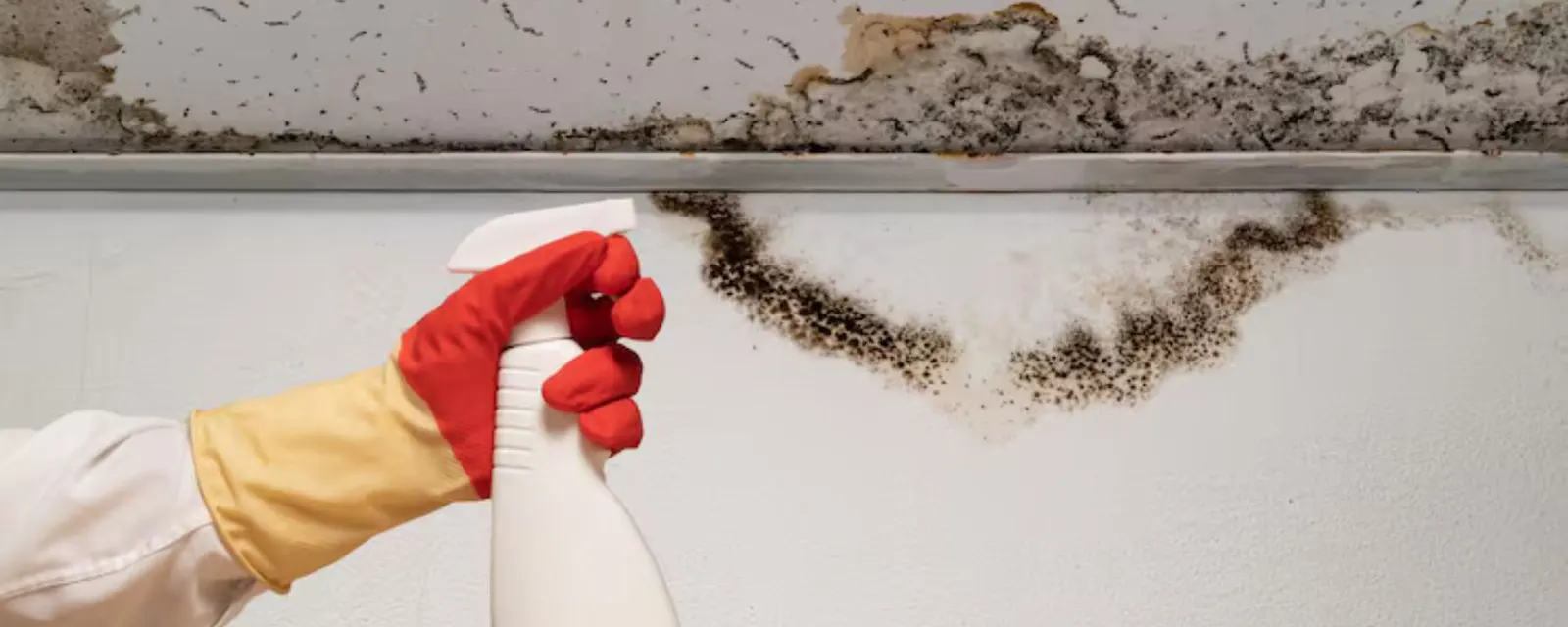
Why Bathroom Ceilings Grow Mold
A shower puts a lot of water vapor into a small room. If the vapor has nowhere to go, it condenses on the coolest surface, which is usually the ceiling. Paint and drywall paper hold that water, and mold feeds on dust and soap residue in it.
A second cause is a leak. A pipe or a roof penetration above the ceiling can wet the board from the other side. The pattern on the ceiling tells you which: a spread of spots over the shower is usually steam, and a single ring or spot beside a vent or fixture is often a leak.
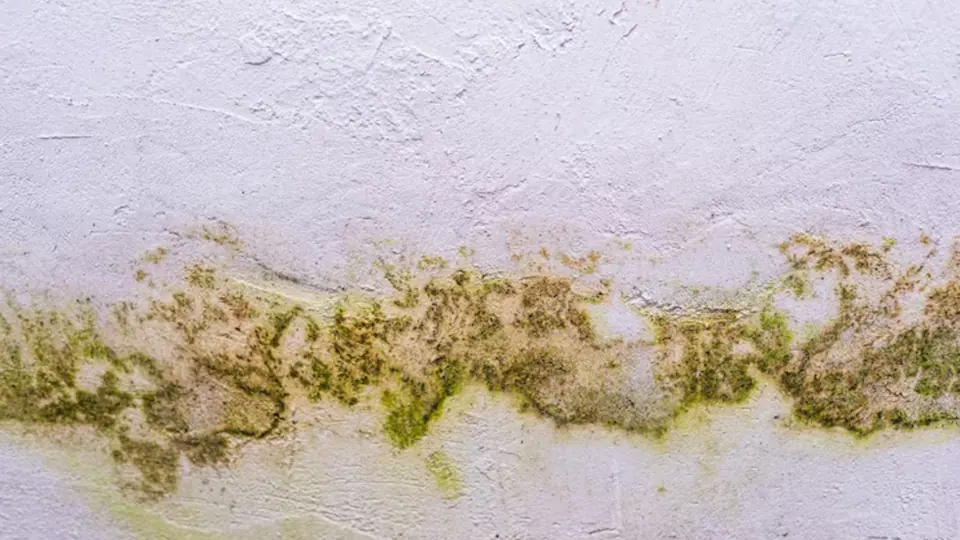
Steam or Leak? Check This First
| What you see | More likely |
|---|---|
| Spots over the shower and across the ceiling | Steam with poor ventilation |
| One ring with a brown edge | A leak above |
| Spots around the exhaust fan | Fan not venting outside or a duct leak |
| Spots only in the corner of two walls | Cold corner condensation |
| Stain after rain | Roof or vent penetration |
A moisture meter confirms what the pattern suggests.
Check the Fan
Many bathroom fans move less air than the label says, and some vent into the attic instead of outside. A fan that vents into an attic dumps moisture on the underside of the roof.
A simple test is to hold a tissue to the fan grille. If the fan does not hold it there, it is weak or blocked. Run the fan during the shower and for a while afterward.
What Is Black Mold, and Do I Need To Panic?
The color does not tell you the species. Black, green and white growth are handled the same way. People with health concerns should speak with a physician. Our mold remediation page describes the process of containment, removal and drying.
We make no health claims and no diagnosis. If the spot is small, on a hard surface, and the moisture cause is fixed, cleaning may be enough. If growth is on drywall or insulation, or covers a larger area, the material usually comes out.
Next Steps
A sensible order
- Photograph the ceiling and note the date
- Check for a leak above, in the attic or the bathroom above
- Test the exhaust fan and confirm it vents outside
- Decide whether the growth is small and on a hard surface, or on drywall or insulation
- Call a professional if the area is large, the material is porous, or you are unsure
If a leak is the cause, water damage repair rebuilds the ceiling after the mold is removed.
Do Utah Rules Cover Mold Work?
The Utah Division of Professional Licensing pages we reviewed do not state a mold remediation license either way, so we make no claim. Ask any company whether your state licenses mold work and what standard it follows.
The industry standard for mold remediation is ANSI/IICRC S520. Ask whether a company's crews work to it, and what testing it recommends before and after.
Source type: Utah Division of Professional Licensing website review.
Cleaning a Light Surface Spot Safely
A small spot on paint with no soft board behind it can often be cleaned by a homeowner. Open a window, run the fan, and wear gloves, eye protection and an N95 respirator. Wipe the area with detergent and water, rinse with a clean damp cloth, and dry it fully with a fan.
Do not mix cleaning products. Bleach and ammonia produce a dangerous gas, and some products also react with other cleaners. Use one product at a time and read its label.
When Scrubbing Is Not Enough
- The paint or board is soft, swollen or crumbling
- The spot returns within weeks of cleaning
- The affected area is larger than about ten square feet
- There is a stain from water above, such as a shower or roof leak
- You see growth around a vent, light fixture or the attic side of the board
The ten square foot figure is a commonly cited guideline for the size a homeowner can manage. Past that size, or any time the source is a leak, a professional plan is a better fit.
What a Professional Plan Includes
A professional plan starts with finding and fixing the moisture source. The crew then isolates the area with plastic sheeting, cleans or removes affected material, and uses HEPA vacuuming on surfaces. The work follows the ANSI/IICRC S520 standard as an industry reference.
Board that is soft or heavily affected is cut out rather than cleaned. New board and primer go in once readings show the area is dry.
Preventing a Repeat
Run the bathroom fan during the shower and for a while afterward. Make sure it vents outdoors and not into the attic. Keep a squeegee or towel handy for wet tile and glass.
If the ceiling stays damp after those steps, the problem may be a leak or a duct issue, and a plumber or HVAC technician should take a look.
For the full process, see our mold remediation page. If a leak caused it, the water damage repair page covers the rebuild. We serve Saratoga Springs and American Fork too.
Rental Bathrooms and Landlord Notice
In a rental, report ceiling mold in writing the day you see it. Include a photo, the date and a note about any leak or broken fan. A written record protects you if the repair takes weeks.
Keep running the fan and wiping wet surfaces while you wait, since those habits cost nothing and slow the problem.
Cost Factors and Insurance
The price depends on how much material is affected, whether containment is needed, the materials involved, the drying days and the rebuild scope. We explain scope and price before work starts.
Mold that results from a sudden, covered water loss may be addressed by your policy. Mold from a long-running leak often is not. Ask your insurer.
Dark spots on a ceiling?
Call and describe where they are and where the water might come from.
Call (385) 988-9410We also serve Draper and Pleasant Grove.
Common Questions
Color alone does not tell you. Health questions belong with your physician.
A small spot on a hard, painted surface may be cleaned once the moisture cause is fixed. Drywall and insulation usually need removal.
We did not find a Utah page that states a mold remediation license. Ask the company and the state.
We do not promise it will not. Fix the moisture and keep the room ventilated.