Minute One: Stop the Water
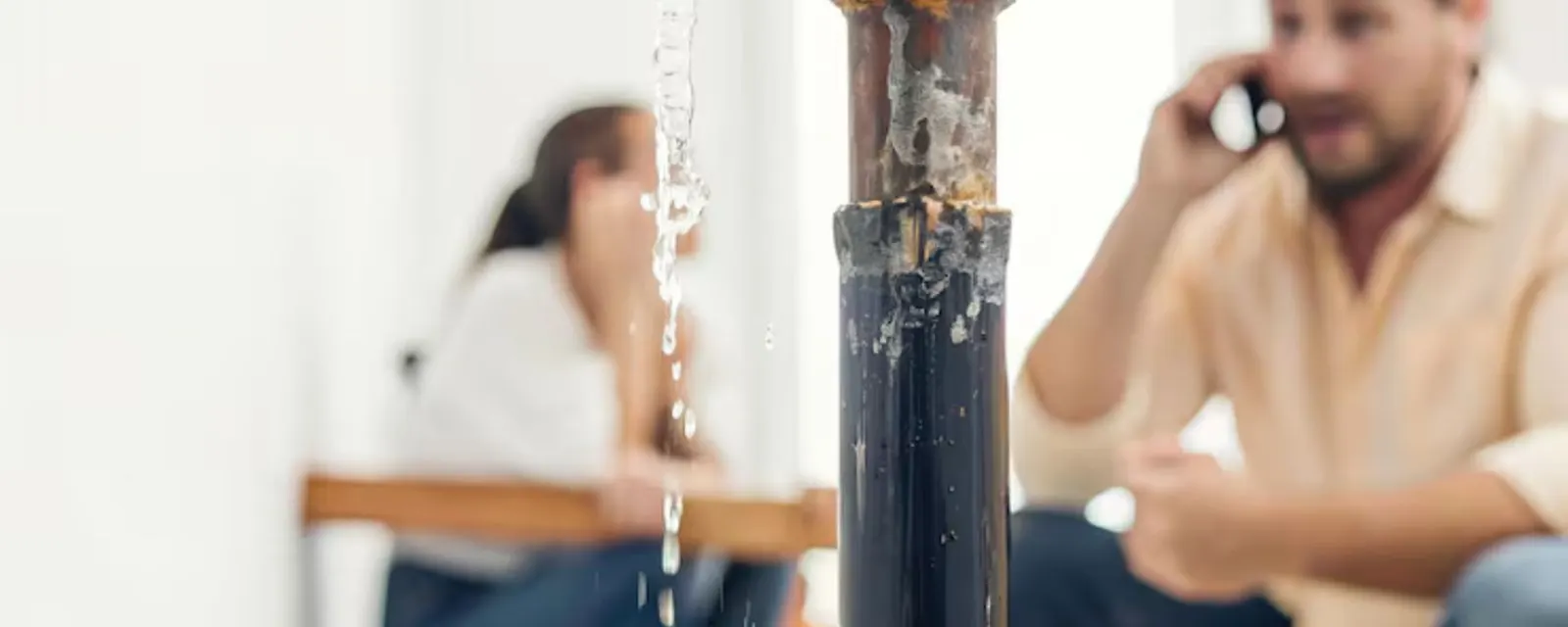
Find the main shutoff. It is often in a basement, a garage or a utility closet, and a quarter-turn ball valve or a round wheel are the usual types. If the pipe is under a sink or behind a toilet, there may be a smaller valve, but the main is the sure one.
If you cannot find the main, look for the meter box near the street, and a city worker or your plumber can help. In Lehi the Water Department manages culinary water and pressurized irrigation as separate systems, so check which line is breaking.
Minutes Two to Ten: Electricity and People
In this order
- Keep people and pets out of wet rooms
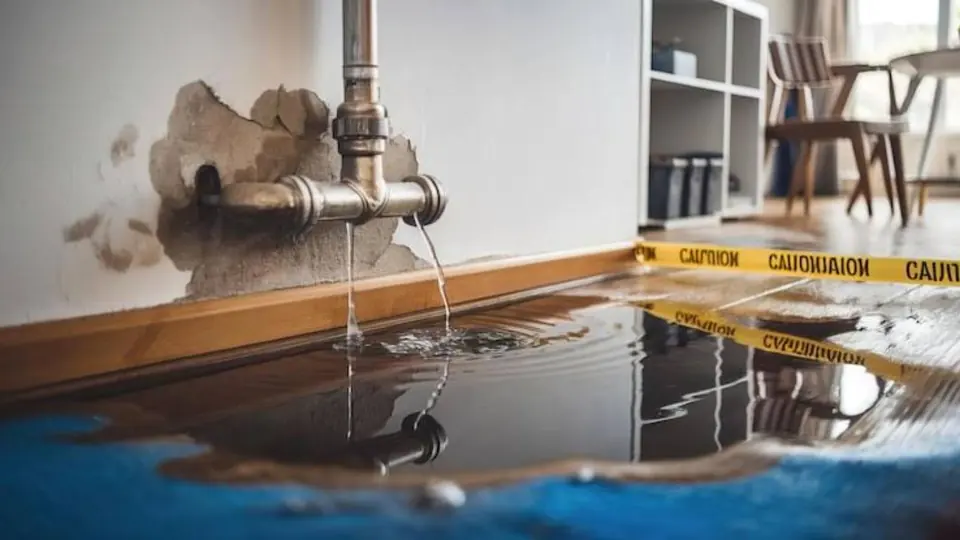
- If water is near outlets or the panel, do not enter. Call the utility or 911
- Turn off power to wet areas at the panel only if you can reach it standing on dry floor
- Never touch an electrical device while standing in water
- Open a faucet at the lowest point to drain the line
Minutes Ten to Sixty: Save What You Can
Lift rugs, boxes, electronics and furniture off wet floors. Place foil or wood blocks under furniture legs on wet carpet. Photograph the water, the source and the damage.
Open cabinet doors under sinks and pull baseboards only if you know how. Mop or vacuum standing water only with equipment rated for it. A household vacuum is not.
Where Water Goes After a Burst
| Location | Where the water ends up |
|---|---|
| Under a kitchen sink | Cabinet base, flooring, the subfloor and the room below |
| In a wall | Wall cavity, insulation, baseboards and flooring |
| Above a ceiling | Ceiling board, light fixtures and the room below |
| In a crawl space | Insulation, joists and humidity throughout the house |
| Outside at a hose bib | Foundation wall and window wells |
Water follows gravity and framing.
Call for emergency water removal once the source is stopped. If the structure stays wet, the next phase is water mitigation.
Why Pipes Burst
- Freezing, when water in a line expands and splits the pipe
- Old or corroded supply lines
- High water pressure
- Loose or aging fittings and braided hoses
- Construction damage or a nail through a line
A frozen line often shows a bulge or a frost spot before it splits. After a thaw, the water appears.
Lehi Water Department and Irrigation Dates
The Lehi City Water Department manages culinary water, pressurized irrigation, sewer and storm drains. Its conservation page lists the irrigation season as April 15 through October 15.
Outside those dates, an outdoor water source is more likely to be a house supply line than irrigation. Tell the dispatcher which season you are in.
Source types: Lehi City Water Department page and conservation page.
A First-Hour Checklist You Can Print
- Shut off the main water valve and open a faucet at the lowest point to drain the lines.
- Turn off power to wet areas at the breaker, only if you can reach the panel without standing in water.
- Move people and pets away from the wet area.
- Take photos and short videos of the damage before moving anything.
- Lift valuables, rugs and electronics off wet floors.
- Call your insurer and a restoration company.
Keep this list near the water heater or main valve. In a crisis, written steps are easier to follow than memory.
Finding the Main Shutoff Before You Need It
Walk the house now and find the main shutoff. It is often near the water heater, in a utility room or where the line enters the home. Turn the handle once to confirm it moves, since a stuck valve is a bad surprise during a flood.
Show everyone in the household where it is. If the valve is old or stiff, a plumber can replace it before an emergency.
Frozen Pipes: Thawing Without Making It Worse
If a pipe has frozen but not burst, open the faucet and warm the pipe slowly with a hair dryer or warm towels. Never use an open flame. Once water flows, check the pipe along its length for cracks or wet spots.
A pipe that has frozen once can crack, and the crack may only show when it thaws. Watch the area closely for the next day.
When Water Reached the Electrical System
Water and electricity are a serious hazard. If water reached outlets, the panel or appliances, stay out of the area and call an electrician. Do not turn the power back on until it has been checked.
A restoration crew can dry the structure, but a licensed electrician decides whether the wiring is safe to energize.
Our emergency water removal and water mitigation pages explain the next steps. Crews respond to Eagle Mountain and Pleasant Grove calls the same way.
Calling Your Insurer and Your Crew
Call your insurer early, but do not let the call delay stopping the water. Write down the claim number and the name of the representative. Ask what they need from you and whether they have a preferred process for emergency mitigation.
Then call a restoration company. A dispatcher can tell you what to do while the crew travels.
After the First Hour
Once the water is off and people are safe, the next job is extraction and drying. The sooner water is removed, the less of the building it reaches. Keep photographing the damage and keep notes of every call you make.
Do not start repairs yourself until the structure is dry and a plan is in place.
Cost Factors and Insurance
Water category, area, materials, drying days and rebuild scope set the price. We explain scope and price before work starts.
A burst pipe is sudden and accidental and is often covered, though policies differ. Ask your insurer and keep your photos.
Pipe burst right now?
Call and describe where the water is. We tell you what to do while a crew is arranged.
Call (385) 988-9410We serve burst pipes in Pleasant Grove and Draper too.
Common Questions
Often in a basement, garage or utility closet near where the line enters. If you cannot find it, check the meter box outside.
Only if the panel is dry and you can reach it standing on a dry floor. If not, stay out and call the utility.
Often, because it is sudden and accidental. Check your policy.
Lehi's Water Department manages pressurized irrigation. Ask which line is yours.