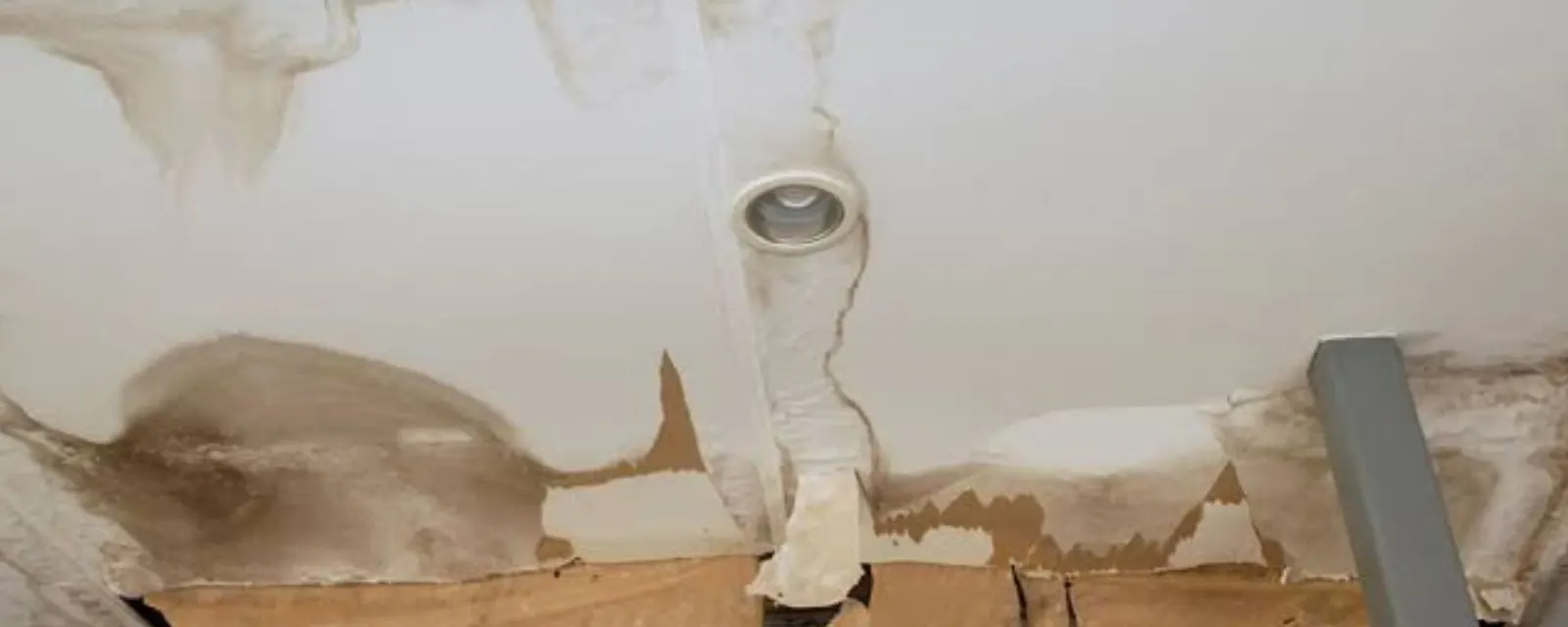
The First Hour
If the ceiling is dripping or bulging, treat it as an emergency. Turn off the main water valve if the source is plumbing. Move people and furniture out of the area beneath the damage, and keep power off to any fixture that is wet.
Do not poke a bulging ceiling yourself. Stay out from under it, and call so we can walk you through the safest next step.
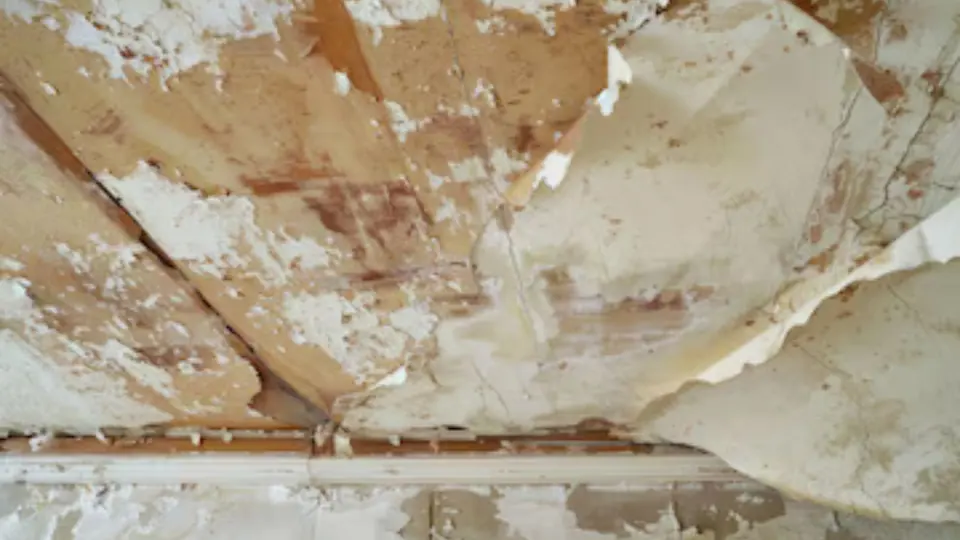
Where the Water Came From
| What you see | Likely source |
|---|---|
| Stain under a bathroom | Shower, toilet supply line or tub |
| Stain under a roof edge or in a top-floor room | Roof leak or ice dam |
| Stain near an air handler or vent | HVAC condensate line backing up |
| Stain in a line along a hallway | Supply pipe above the ceiling |
| Drip after a storm only | Roof penetration, flashing or siding |
The source decides whether a plumber, a roofer or an HVAC technician comes first.
Callers describe an attic dripping and a roof leak with the same words, and they are two different jobs. Fix the source before the ceiling, and do not paint until the board is dry.
What Ceiling Repair Involves
Water travels along the top of drywall, so the wet area is bigger than the stain. A technician maps the wet zone with a meter, cuts out damaged board and removes wet insulation. The joists above are dried, and then new board, tape, texture and paint go in.
Textured ceilings are common in Utah homes, and matching texture takes a few passes. A patch that does not match shows under daylight.
When a Ceiling Is Beyond Saving
- It is sagging, bulging or has cracked tape lines
- The board crumbles when pressed
- It has been wet for more than a day or two
- The water was from a sewer, a toilet or an outdoor source
- Mold or a strong musty smell is present
In those cases, the board comes out. For what happens after that, see water damage repair, and for the drying that comes first, read about water mitigation.
Roofs, Snow and Lehi Winters
Lehi's Main Street Historic District, listed on the National Register, holds brick buildings built from the 1890s through the 1920s. Older ceilings in buildings like those can be plaster over lath, which holds water differently than modern drywall.
Ask a roofer to check flashing and vents after a winter with wet snow, and tell the crew the age of the building. A ceiling stain in spring often traces back to an ice dam or a failed roof penetration.
Source type: National Register of Historic Places nomination for the Lehi Main Street Historic District.
Reading the Stain: What the Shape Tells You
A brown ring with a darker edge often means water arrived, dried and arrived again. A single fresh stain with a drip usually means an active leak close by. Streaks that follow a joist line point to water traveling along the framing from farther away.
These are clues, not a diagnosis. The source can be several feet from the stain, so a plumber or roofer should confirm it before a ceiling is patched.
A Small Stain Versus a Sagging Ceiling
| What you see | What it usually means | Next step |
|---|---|---|
| A dry, faint stain | Old leak that stopped | Confirm dryness, find the cause, then repaint |
| A damp stain that grows | Active leak or condensation | Find the source and call a crew to dry the cavity |
| A bulge or sag | Water held by the board | Stay out from under it and call right away |
| Peeling paint or a soft spot | Board has absorbed water for some time | Plan to cut out and replace the board |
| Drips from a light fixture | Water reaching the wiring | Turn off the breaker and call |
A sagging or dripping ceiling near a light fixture is an electrical hazard.
Insulation Above the Ceiling
Wet insulation loses much of its value and holds water against the board. If a ceiling gets opened, the crew checks the insulation above it and removes what stayed wet. Dry batts can sometimes be kept, but that depends on how long they were wet and what kind of water reached them.
Blown-in insulation is harder to dry in place. Expect a conversation about removal and replacement.
Matching the Texture and Paint
Textured ceilings are the part of the repair that shows. Popcorn, knockdown and orange peel each need a matching technique, and testing a small patch first avoids a mismatched finish. Sand and prime new board so the paint soaks in evenly.
Paint the full ceiling plane from wall to wall. A single patch of fresh white next to older paint tends to look like a stain even when it is not.
For an active leak, start with emergency water removal. For the rebuild after drying, see water damage repair.
Attic and Roof Checks
When a stain appears after rain or snowmelt, a trip into the attic helps. Look for wet insulation, dark rafters, daylight around a vent pipe or a damp patch under the roof deck. Photograph anything you find.
Roof repair belongs to a roofer, and the ceiling repair waits until the roof is sound.
Ceiling Fans, Lights and Fixtures
A wet ceiling can hide water around the box behind a light or fan. Turn off the breaker for that circuit before anyone touches the fixture. An electrician should check any fixture that got wet before it is used again.
Remove light bulbs that are holding water only if the power is off, and let the fixture drain into a bucket.
Cost Factors and Insurance
Ceiling repairs vary with the water category, the area affected, the materials involved, the days of drying and the rebuild scope. We explain scope and price before work starts.
Sudden and accidental ceiling damage, such as a burst pipe above, is often covered. A roof that leaked for years often is not. Ask your insurer and document the damage.
A ceiling dripping now?
Call and describe where it is dripping. We tell you what to shut off and what to avoid.
Call (385) 988-9410Crews also serve ceilings in Eagle Mountain and Draper.
Common Questions
Yes. It can collapse, and the water it holds is heavy. Keep out from under it and call.
Only after the source is fixed and the board is dry. Otherwise the stain and any mold return.
Insulation and drywall hold water, and it can keep wicking. Moisture readings confirm whether it is dry.
Often, if it was sudden and accidental. Gradual leaks are often excluded.