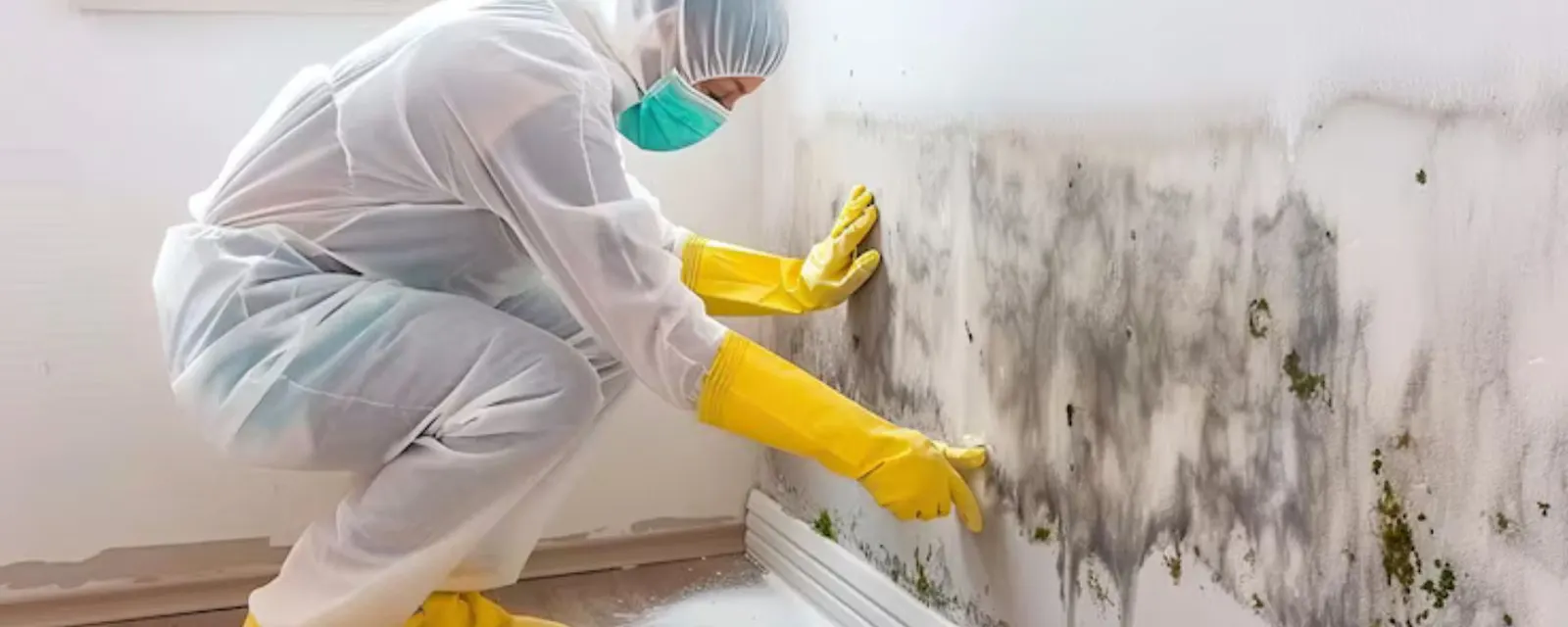
Start With Protection and Containment
Wear gloves, eye protection and a respirator rated for particles. Close the room, cover vents and keep pets and children out. Do not use a household fan, which pushes spores into other rooms.
Work wet. Dry scrubbing throws growth into the air.
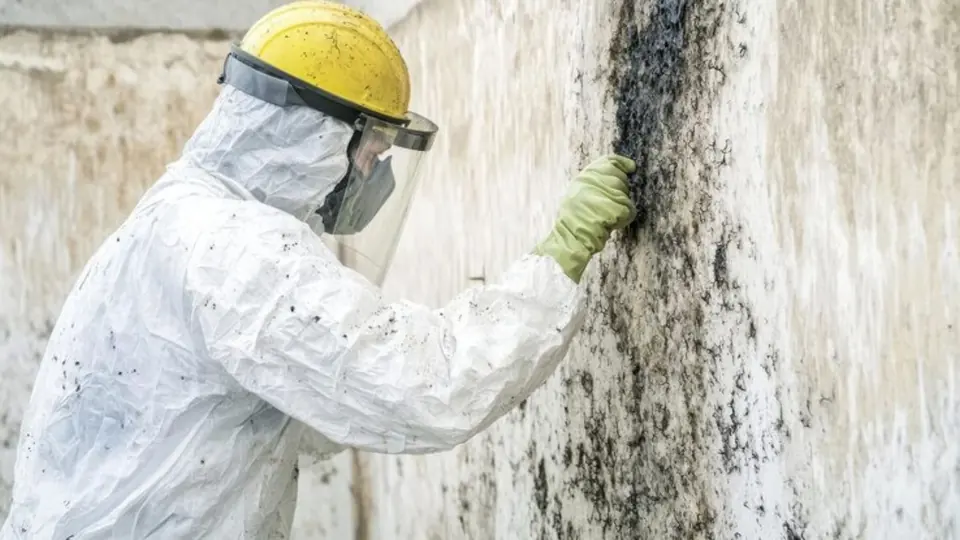
Material by Material
| Surface | Approach |
|---|---|
| Glazed tile and grout | Wet-clean, dry fully, reseal grout |
| Sealed or painted wood trim | Wet-clean and dry, replace if soft |
| Unfinished wood framing | HEPA vacuum and clean, a crew may sand |
| Painted drywall | Often cut out when growth is on the paper |
| Carpet and pad | Remove and discard |
| Ceiling tiles and insulation | Remove and replace |
| Glass and metal | Wet-clean and dry |
Porous materials hold growth below the surface.
Cleaning Steps for a Hard Surface
Wet the area
Mist lightly so spores stay down.
Wipe
Use disposable cloths and a mild detergent and water.
Rinse and dry
Wipe clean, then dry thoroughly with towels and open air.
Bag and remove
Seal wipes and debris in bags and take them out right away.
Do not mix cleaning products, and test for moisture again after a day. Mold that returns means water is still present.
When To Stop and Call
- The area is larger than a few spots
- It is on drywall, insulation or carpet
- The water was sewage or flood water
- You smell mold but cannot find it
- It keeps returning after cleaning
- Someone in the home has health concerns
A crew contains the area and removes material to the ANSI/IICRC S520 standard, as described on our mold remediation page. If the structure is still wet, start with water mitigation.
Lehi Climate and Mold
The Lehi City Water Department runs pressurized irrigation from April 15 to October 15. A sprinkler near a basement window can send water against a foundation during those months, and a damp wall base is where mold often starts.
Check window wells and sprinkler heads at the start of the season.
Source type: Lehi City conservation page.
Tools and Supplies for a Small Cleanup
- N95 respirator, gloves and eye protection
- Plastic sheeting and painter's tape for containment
- Detergent, clean rags and a bucket
- Heavy trash bags for used materials
- A fan and a dehumidifier for drying
- A flashlight and a moisture meter for checking
Skip anything you do not need. More products do not mean a better result, and mixing cleaners can be unsafe.
Why Drying Comes Before the Last Wipe
A surface can look clean and still hold moisture. If it stays damp, growth can return in days. Dry the area for at least a day or two, then check it again with a meter if you have one.
Keep fans running on a low setting and use a dehumidifier in closed rooms. Open doors help air move through the space.
Disposing of Materials
Bag removed material in heavy plastic before carrying it through the house. Wipe the outside of the bag, and move it outdoors by the shortest path. Local trash rules apply, so ask your waste hauler if you are unsure.
Wash your clothes separately and rinse your hands and face when you finish. Clean tools with detergent before storing them.
A Realistic Follow-Up Plan
Check the area weekly for a month. Look for staining, odor or new growth, and keep photos so you can compare. If anything returns, find the moisture source before cleaning again.
A repeat usually points to a leak, a humidity problem or a material that should have been removed. A professional look can save repeated effort.
See our mold remediation page and water damage cleanup page for professional options. We serve American Fork and Eagle Mountain as well as Lehi.
Cleaning Hard Surfaces Versus Porous Ones
Tile, glass, metal and sealed wood can be cleaned and kept. Drywall, ceiling tile, carpet and insulation are porous and often have to be removed if growth is more than light and surface level. When in doubt, ask for a second opinion before deciding.
Removing a section of drywall is a reasonable step when the board is soft. Cut along the studs and bag the pieces in plastic.
Mistakes That Make It Worse
- Scrubbing dry mold without wetting it first
- Using a fan that blows spores through the house
- Painting over growth without drying and priming
- Mixing bleach with other cleaners
- Skipping the step of finding the water source
Most failed cleanups come from the last item. If water keeps arriving, the cleaning has to be repeated.
Knowing When It Is Done
The surface looks clean, the area smells normal and moisture readings match dry reference materials. Watch the area over the following weeks, since returning growth tells you the job is not finished. A written record with dates and photos makes follow-up easier.
For larger projects, an independent check from a third party can confirm the result.
Working Alone or With Help
Small jobs can be done alone, but a helper makes containment and disposal easier. Agree on a plan before you start, including who handles the ladder, the bags and the cleanup at the end.
Take breaks outside the work area and keep fresh air moving while you work.
Wear the same protection from the first wipe to the last bag. Taking a mask off early to rest is how people end up breathing dust.
Change out of work clothes before moving through the rest of the house.
Keep a log of what you did and the date, so a later check has something to compare against.
If a spot returns, that log tells a professional where to start.
Cost Factors and Insurance
The price depends on area, containment, materials, drying days and rebuild scope. We explain scope and price before work starts.
Insurance may respond to mold after a sudden, covered loss and often does not respond to long-term moisture. Ask your insurer.
We serve American Fork and Pleasant Grove too.
Common Questions
Ask a professional. Neither replaces removing moisture and porous material.
Wet-clean, dry fully and reseal. Return growth means moisture.
Wear a respirator rated for particles, plus gloves and eye protection.
When it covers more than a small area or sits on drywall, insulation or carpet.