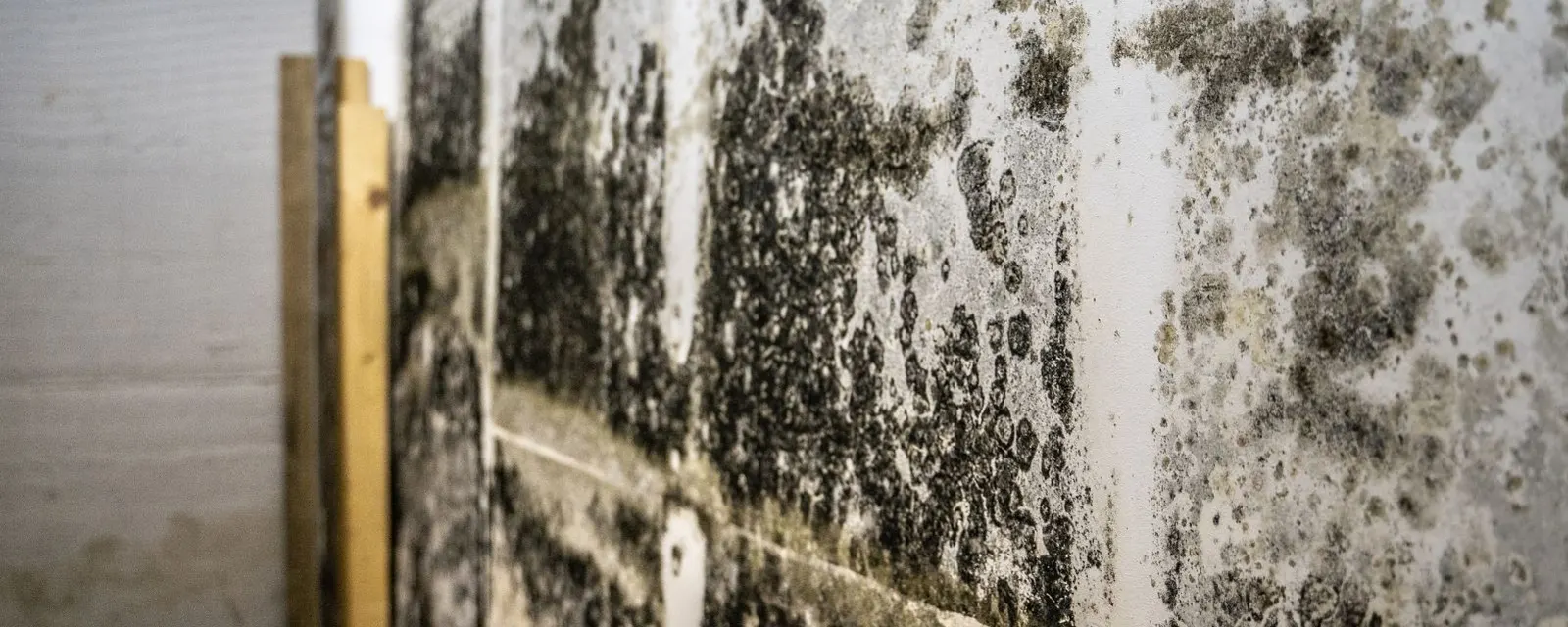
Moisture Comes Before Cleaning
Basement mold has a water source. Window wells that fill, a floor drain that backs up, a dehumidifier that stopped, a leaking pipe and a foundation that sweats are the usual suspects. If the source stays, the mold stays.
Walk the basement with a flashlight and look at the wall bases, the window wells and the pipes. If you cannot find the source, a moisture survey finds it.
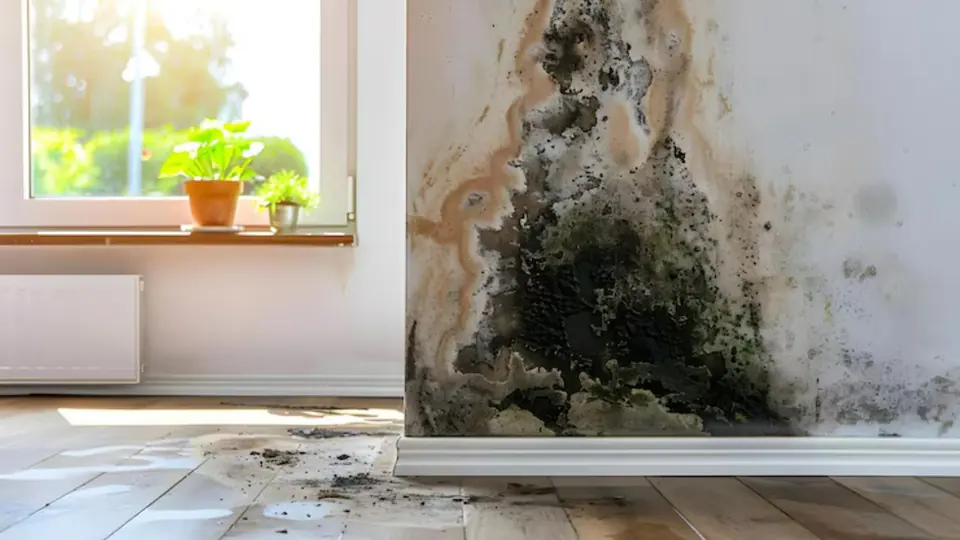
Choose the Right Approach for the Material
| Surface | Usual approach |
|---|---|
| Painted concrete or sealed tile | Clean after the moisture is fixed |
| Sealed wood trim | Clean and dry, replace if soft |
| Drywall | Cut out affected board |
| Carpet and pad | Remove and discard |
| Insulation | Remove and replace |
| Stored cardboard and fabric | Discard or professionally clean |
A technician decides each case with a meter on site.
Cleaning a Small Area Safely
If you clean a small hard surface yourself, wear gloves, eye protection and a respirator rated for particles, and keep the area ventilated. Wet-wipe the surface and let it dry fully. Avoid dry brushing, which sends spores into the air.
Do not mix cleaning products, and do not paint over growth. Paint hides it and seals moisture in.
What Does Not Work
- Fogging or spraying a disinfectant on porous material without removing it
- Painting over mold with primer
- Running a fan on growth, which spreads spores
- Cleaning while the moisture source is still active
- Sealing a damp wall behind paneling
Once the moisture is fixed and the damaged material is out, drying and repair follow. See mold remediation for the full process, and water mitigation if the structure is still wet.
When To Call a Professional
Call when growth covers a large area, when it is on drywall or insulation, when it came from sewage or flood water, or when you are unsure of the source. A crew contains the area with plastic and negative air so spores do not spread through the house.
The industry standard is ANSI/IICRC S520, and you can ask any company whether its crews work to it.
Utah County Flood Records
The Utah hazard mitigation plan's flood chapter records that Utah County had 100 National Flood Insurance Program losses and 695 active policies as of January 2023. It also lists Utah County in federal flood declarations from 1983, 1984 and 2011.
Those numbers are county-wide, not Lehi-specific, but they show that basement water is a real local risk. A basement that has flooded once is a basement worth checking for hidden mold.
Source type: Utah Division of Emergency Management hazard mitigation plan, flood chapter.
Humidity and Airflow in a Basement
Basements run cooler than the rest of the house, and cool surfaces collect moisture from the air. A hygrometer costs little and shows the relative humidity in the space. Many guides suggest keeping indoor humidity below about 50 percent, though a number alone does not tell you where moisture is coming from.
A dehumidifier helps with humid air, but it does not fix a leak or a wet wall. Empty or drain it regularly, and keep it away from walls so air can circulate.
Storage and Finishes That Help
- Keep boxes off the floor and a few inches from exterior walls
- Use plastic bins instead of cardboard for stored items
- Choose moisture-tolerant flooring over carpet on a slab
- Keep furniture slightly away from walls for airflow
- Seal gaps where pipes or wires pass through the foundation
Checking Where Moisture Is Coming From
A simple plastic sheet test can help. Tape a square of plastic to the floor or wall and leave it for a day or two. Moisture under the plastic points to water coming through the concrete, while moisture on top of the plastic points to humid air condensing.
This is a rough check, not a measurement. A moisture meter and a professional look give a clearer answer.
Why Killing Mold Is the Wrong Goal
Dead mold can still leave stains and material damage. The practical goal is to remove growth from surfaces, fix the moisture and take out material that cannot be cleaned. Spraying a product over a wet source gives the problem time to return.
We avoid promising that mold will never come back. What a good plan does is remove the cause and the affected material, so a repeat is less likely.
See our mold remediation page and water damage cleanup page for how crews handle it. Basements in Pleasant Grove and American Fork follow the same logic.
A Month-by-Month Habit Check
Prevention is mostly routine. Check the sump pump, wipe condensation from cold pipes and windows, and look under stored boxes. After storms, walk the perimeter of the basement and look for new damp spots.
A small notebook with dates and observations helps you see patterns. If a spot returns in the same place after every storm, the cause is outside the wall.
Finished and Unfinished Basements Differ
An unfinished basement shows its problems on bare concrete and framing, which are easy to inspect. A finished basement hides them behind drywall, paneling and flooring. In a finished space, a musty smell deserves a closer look at the bottom of the walls.
Pulling baseboard in a small spot can reveal whether the wall is dry behind it.
Cost Factors and Insurance
The price depends on the area, whether containment is needed, the materials, the drying days and the rebuild scope. We explain scope and price before work starts.
Mold from a sudden, covered loss may be addressed by your policy, and mold from long-term moisture often is not. Ask your insurer.
Basement mold you cannot trace?
Call and describe where it is and when it started.
Call (385) 988-9410The same steps apply in Eagle Mountain and Pleasant Grove.
Common Questions
It is not a substitute for removing moisture, and it does not work well on porous materials. Ask a professional for guidance.
It helps keep humidity down, but it does not fix a leak or clean existing growth.
Any basement with a moisture source can grow mold. Utah County flood records show basement water is a real risk.
If it follows a sudden, covered water loss, possibly. Ask your insurer.