Signs You Can Smell and Hear
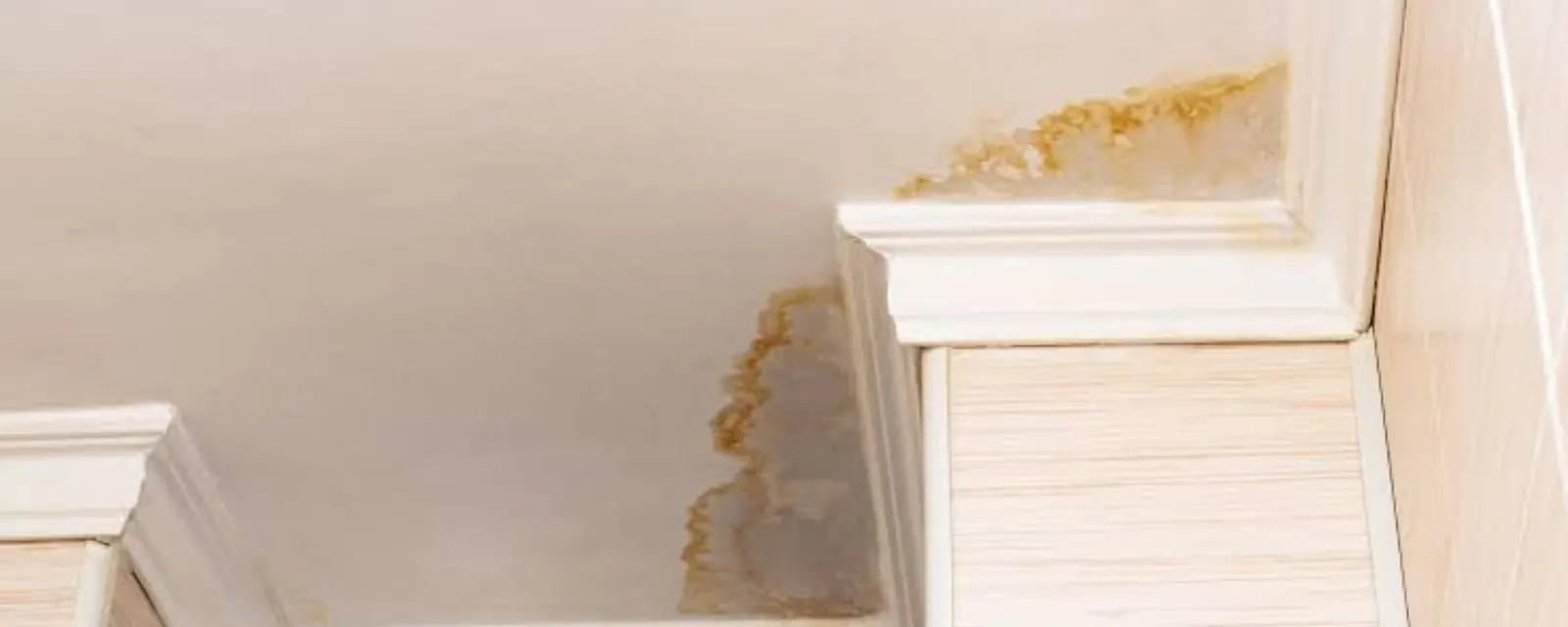
A musty or earthy smell in a closet, a bathroom or a finished basement is the first sign for many homeowners. It means a material has been damp long enough for microbes to grow. The smell often fades when a door is open and returns when it closes.
Sound matters too. A faint hiss behind a wall, a dripping sound with no visible drip and a water heater that runs more often than before can all point to a hidden leak.
Signs You Can See
| Sign | What it often means |
|---|---|
| Brown or yellow ring on a ceiling | Water above, now dry or still active |
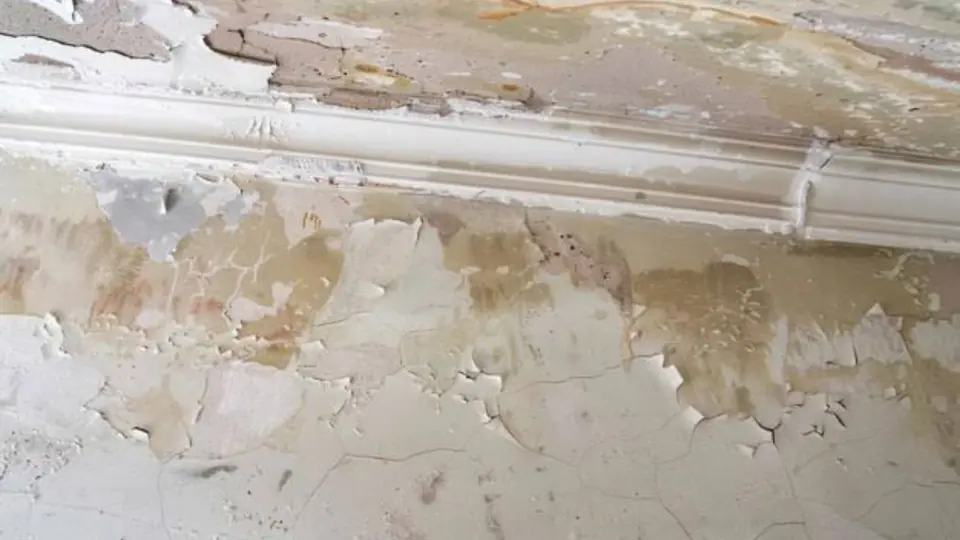
| Paint bubbling or peeling in a band near the floor | Moisture wicking up from a wall base or slab |
| Baseboards that swell or gap | Water at the bottom plate |
| Cupped or crowned hardwood | Moisture under or around the boards |
| Tile that sounds hollow or has loose grout | Water under the tile |
| White crust on concrete or brick | Moisture moving through the masonry |
| Dark spots in corners or on a ceiling | Moisture and possible mold |
Any one of these is a prompt to check. Two or more calls for a moisture survey.
Signs in Your Bills and Appliances
A water bill that rises with no new fixtures, guests or lawn work is one of the best early warnings. To test for a hidden leak, shut off every fixture, read your meter, wait an hour without using water and read it again. A moving dial means a leak somewhere between the meter and the house.
Appliances give clues as well. A washing machine hose bulge, a rusty water heater base and a refrigerator ice-maker line with a drip are all small failures that become large ones.
Signs After a Storm or Snowmelt
- Water marks on basement walls or around window wells
- A damp patch at a basement wall base after heavy rain
- A smell that appears a few days after a storm
- Stains on ceilings under a roof that was bare of snow after a melt
- A sump pump that runs constantly or not at all
If any of these appear after a storm, treat the water as outside water, which is usually Category 3. See flood damage restoration for the steps.
What To Do When You Find a Sign
Mark it
Draw a pencil line around a stain and date it to see whether it grows.
Check the source
Look above and behind the sign. A supply line, a roof or a vent is often nearby.
Measure moisture
A meter in a technician hands tells you more than a guess.
Dry and repair
Fix the source, dry the structure, then repair the finish.
Early drying is the cheapest drying. Our water mitigation service describes what a moisture survey and drying plan include.
Lehi Water Supply Facts Worth Knowing
Lehi's 2025 Water Quality Report states that the city's culinary water comes from seven wells, three springs and surface water from the Central Utah Water Conservancy District. It does not list a hardness figure, so test your own tap if you want one.
The Census Bureau counts 23,886 households in Lehi for 2020 through 2024. In a city that size, plumbing from many different eras sits side by side, so the signs of a failing line differ by block.
Source types: Lehi City 2025 Water Quality Report, U.S. Census Bureau QuickFacts.
A Room-by-Room Walk Through
Walk your house once with a flashlight and a notepad. Start under every sink and look for staining, swelling or a rusted trap. Check the base of the toilet for soft flooring, the washing machine hoses for bulges, and the water heater for drips or rust on the pan.
In a basement, look at the bottom of walls, the corners and the area around the sump pit or floor drain. Look up as well, since a stain under a bathroom often points to a leak from above.
| Location | What to check | What it can mean |
|---|---|---|
| Under kitchen and bath sinks | Staining, swelling, rust, damp cabinet floor | Slow supply or drain leak |
| Around the toilet | Soft floor, loose base, rust on bolts | Failed seal or supply leak |
| Basement walls and floor | White powder, damp patches, odor | Moisture coming through concrete |
| Ceiling below a bathroom | Brown rings, bubbling paint | Shower or tub leak above |
| Water heater area | Drips, rust, wet pan | Tank or connection leak |
| Exterior walls near windows | Peeling paint, stained sills | Flashing or seal failure |
The Water Meter Test
A simple test can tell you if there is a hidden leak on the supply side. Turn off every fixture and appliance in the house, then look at your water meter. If the leak indicator or the dial is still moving, water is going somewhere.
Take a photo of the reading, wait an hour without using water, and look again. A change points to a leak between the meter and the fixtures. Call a plumber with that photo in hand.
Why Small Signs Deserve Attention
Water that leaks slowly can run for weeks before a stain appears. During that time it can soak framing, insulation and subfloor, and it gives mold what it needs to grow. Repair costs usually rise the longer the water goes unnoticed.
That is why a musty smell, a warped baseboard or a stain that reappears after repainting deserves a closer look rather than another coat of paint.
When you are ready for a professional look, our water mitigation and water damage repair pages explain what to expect. Homes in American Fork and Draper show the same warning signs.
Cost Factors and Insurance
Early detection keeps costs low because less material gets wet. Water category, area, materials, drying days and rebuild scope set the price, and we explain scope and price before work starts.
Sudden and accidental water damage is often covered, and gradual leaks often are not, so write down when you first noticed each sign.
Seeing two or more of these signs?
Call and describe what you see. A moisture survey tells you where the water is.
Call (385) 988-9410We serve homes in Saratoga Springs and Eagle Mountain as well.
Common Questions
Turn off all water use, record the meter reading, wait an hour, and read it again. A change means water is moving somewhere in your system.
Not always, but it means moisture. Find the water before you try to clean.
Look under sinks, around toilets and near appliances every few months, and after any storm.
Yes, behind walls and under floors. Moisture readings find what the eye cannot.